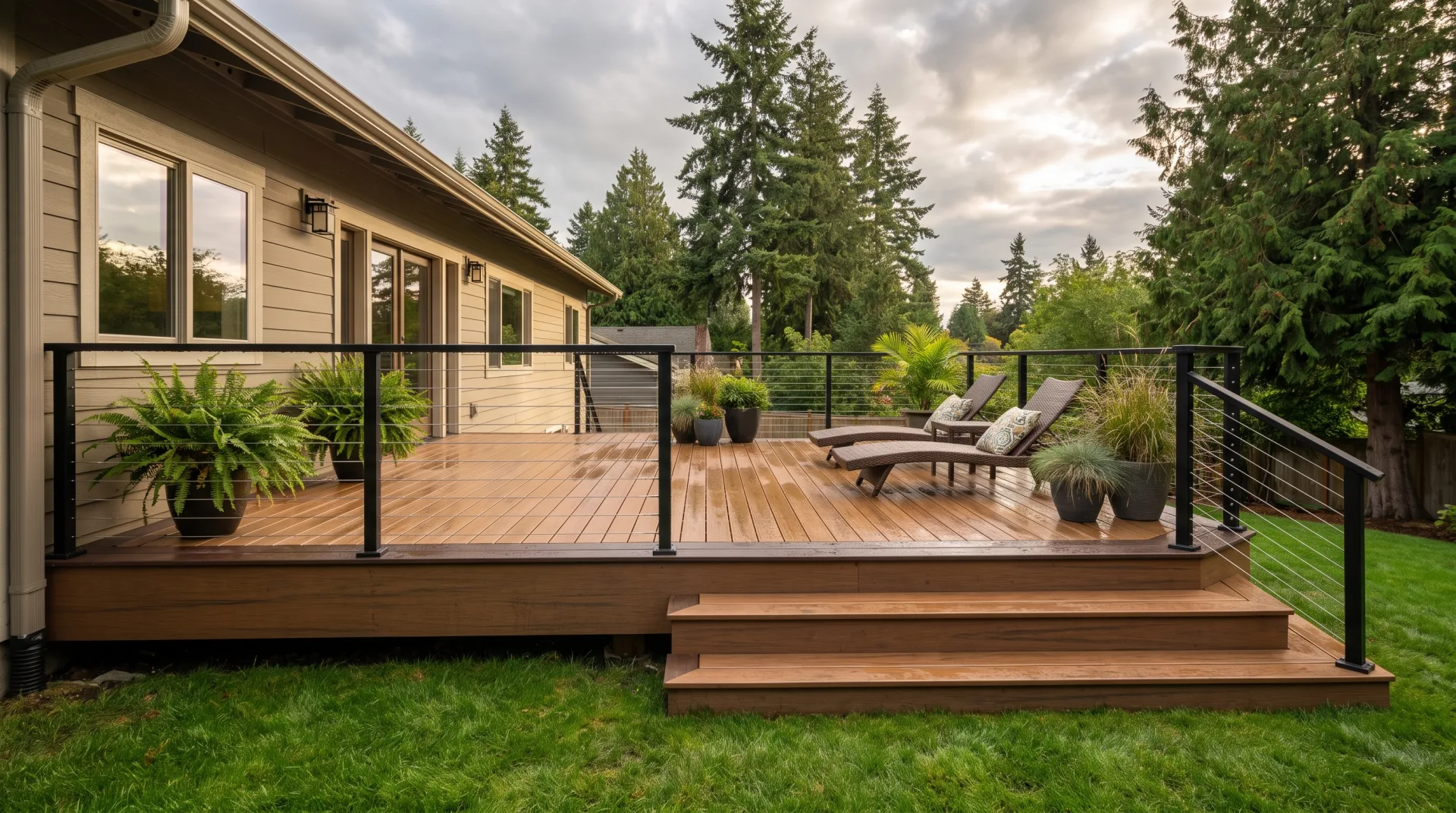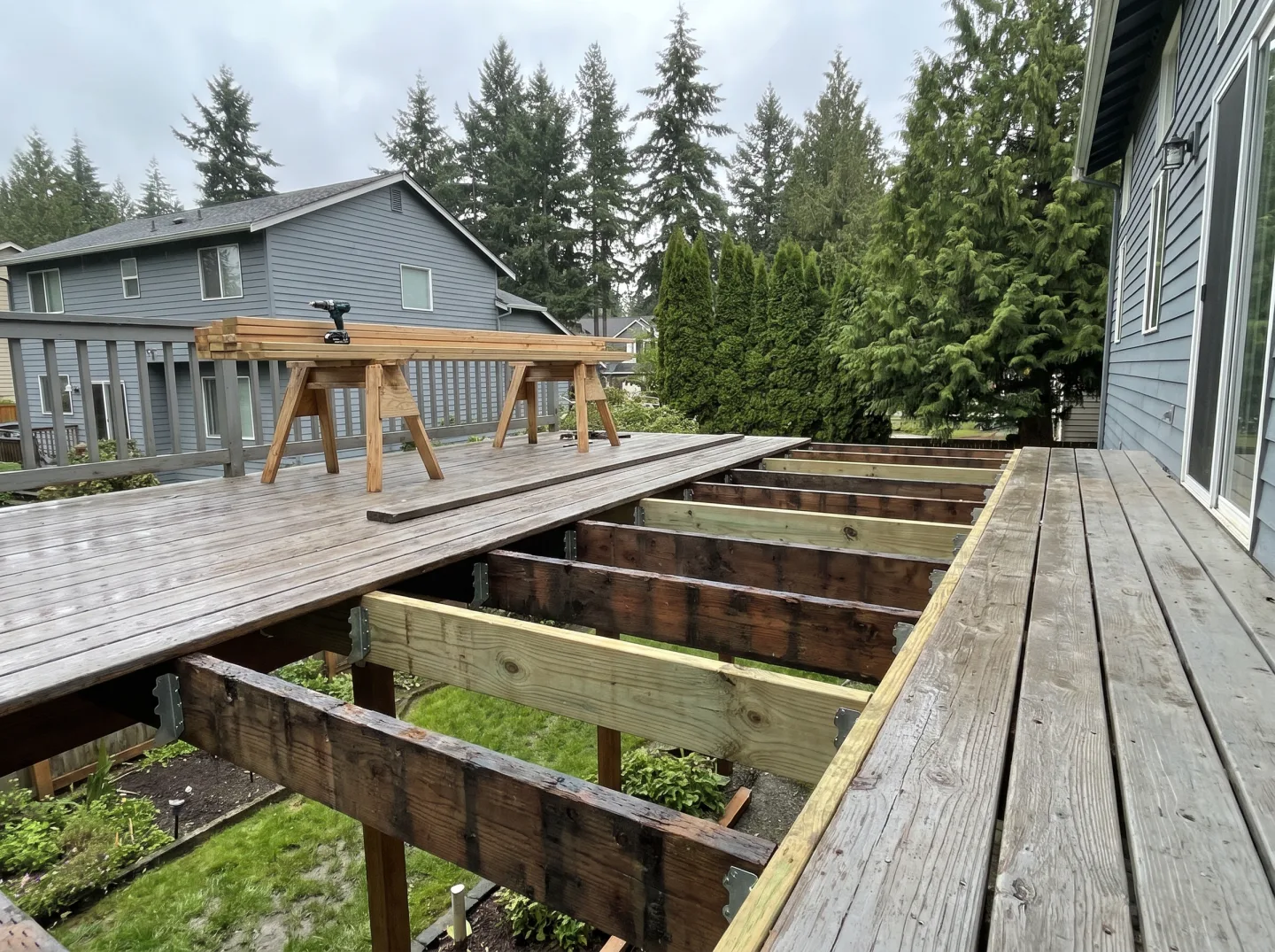



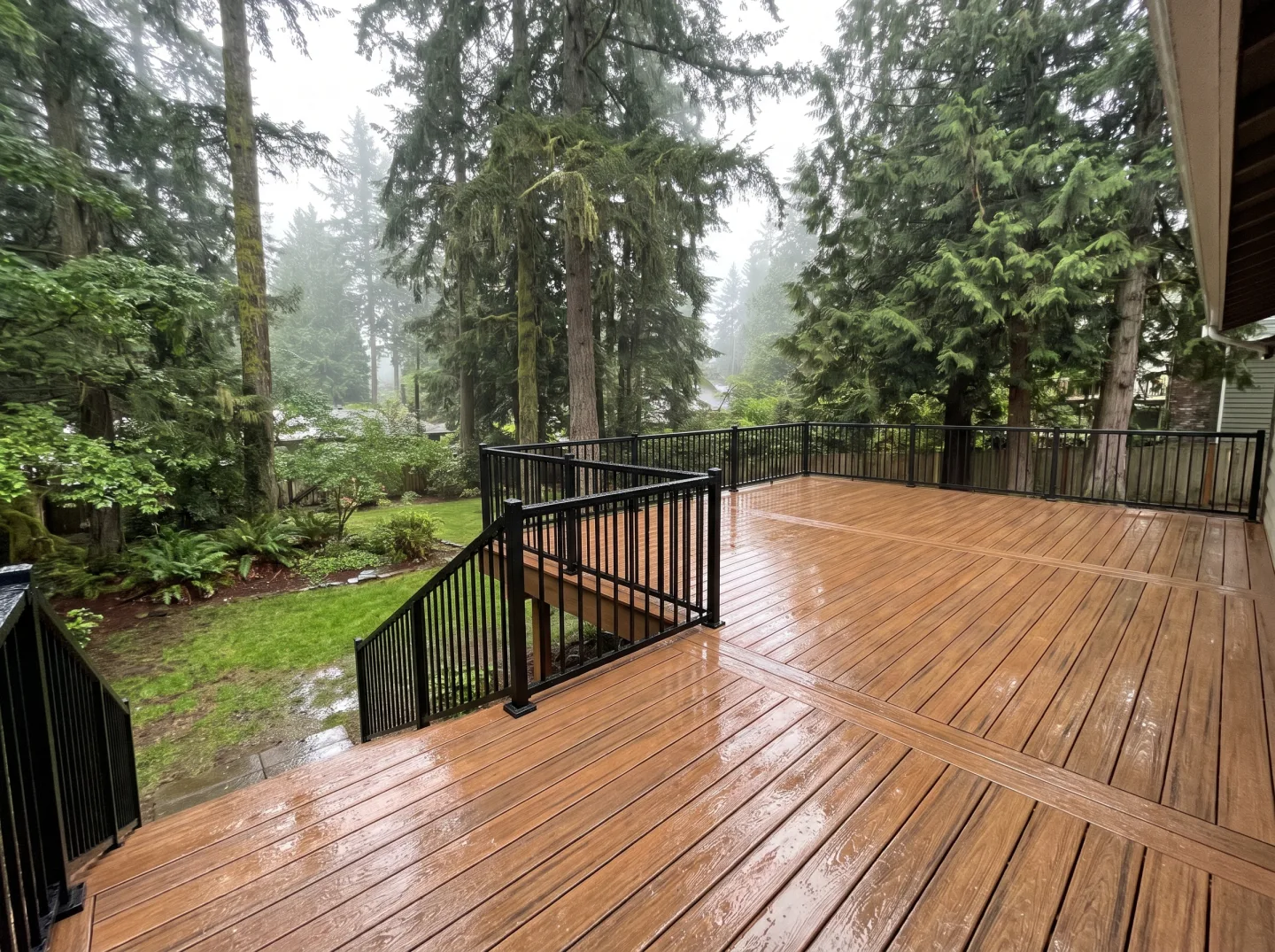
Updated November 2026 · Written by the Craft Boys crew. We're licensed Washington deck builders (Lic. #HOMERRA771N2) based in Redmond, and we've built and restored 300+ decks in every material on this list.
Choosing the decking is the biggest decision in a new deck, and in Seattle it isn't the same decision as in Phoenix or Florida. Our decks sit wet for most of the year. Many are shaded by firs and cedars, collect needles and moss, and see more drizzle than sun. This guide compares the three materials most homeowners here choose between: pressure-treated lumber, Western red cedar and capped composite. We cover cost, lifespan, maintenance, mold and moss, slipperiness and resale, and show what each one really costs over 20 years.
Key takeaways
- Short answer for most Seattle homeowners: capped composite on a pressure-treated frame. It costs more upfront but needs no sealing, doesn't rot or splinter, and lasts 25–50 years.
- Installed cost in 2026: pressure-treated about $45–$65 per sq ft, cedar $55–$80, composite $70–$105.
- Wood decks here need cleaning and sealing every 1–3 years. On a 320 sq ft deck that adds roughly $6,000–$11,000 over 20 years, which closes most of the price gap with composite.
- Cedar is the right pick if you love real wood and don't mind regular sealing. Pressure-treated makes sense for tight budgets, low decks and rentals.
- In shady, damp yards, capped composite resists mold and moss far better than wood. Older uncapped composite does not, so the product matters.
- Whatever goes on top, the frame underneath is pressure-treated wood. Its details decide how long the deck really lasts.
In this guide
- Composite vs. cedar vs. pressure-treated at a glance
- Upfront cost by material
- The 20-year cost: what each deck really costs
- Pressure-treated lumber: pros and cons
- Western red cedar: pros and cons
- Composite decking: pros and cons
- Mold, moss and slippery decks in the Pacific Northwest
- The frame matters more than the boards
- Which decking is right for you?
- Decking materials FAQ
Composite vs. cedar vs. pressure-treated at a glance
For most homeowners in the Seattle area who plan to stay five to ten years or longer, capped composite is the best value. It costs about 25–35% more to install than cedar but skips the sealing that wood needs here every one to three years, and it lasts two to three times as long. Cedar wins on natural beauty and feel. Pressure-treated wins on upfront price.
Table 1. Decking materials compared for the Seattle climate
| Pressure-treated | Western red cedar | Capped composite | |
|---|---|---|---|
| Installed cost (2026) | $45–$65 / sq ft | $55–$80 / sq ft | $70–$105 / sq ft |
| Typical lifespan here | 15–20 years with care | 15–20 years with care | 25–50 years (per warranty tier) |
| Sealing | Every 1–3 years | Every 1–3 years | Never |
| Rot and insects | Resists, but checks and splits as it dries | Naturally resistant heartwood | Doesn't rot |
| Mold and moss | Grows into the grain | Grows into the grain | Surface only, washes off |
| Splinters | Yes, as it weathers | Some, softer wood | No |
| Look | Greenish-brown, takes stain | Warm red-amber, silvers if unsealed | Wood-grain colors, consistent |
| Warranty | Limited lumber warranty | None on the boards | 25–50-year fade, stain and structural |
| Best for | Tight budgets, low decks, rentals | Real-wood lovers who'll maintain it | Owners staying 10+ years, shady yards |
Upfront cost by material
These are installed prices for a complete deck in the Seattle area: footings, framing, decking, a standard railing, simple stairs and labor. Composite boards themselves can cost three to four times as much as pressure-treated boards. But the framing, footings, labor and permit are similar for all three, so the total project gap is much smaller than the board price suggests.
Table 2. Typical total cost for a 16×20 ft (320 sq ft) deck, Seattle area, before sales tax
| Material | Per sq ft installed | 320 sq ft deck |
|---|---|---|
| Pressure-treated | $45–$65 | $14,400–$20,800 |
| Western red cedar | $55–$80 | $17,600–$25,600 |
| Capped composite | $70–$105 | $22,400–$33,600 |
| Ipe / tropical hardwood | $90–$140+ | $28,800–$44,800+ |
Height, stairs, railing style and site access move the price as much as the decking does. Our Seattle deck cost guide breaks those factors down, along with sizes and permit rules by city.
The 20-year cost: what each deck really costs
Upfront price is only half the story in a rainy climate. A wood deck needs a professional clean and seal every one to three years, at about $2–$4 per sq ft for a full sand, stain and seal. Over 20 years that's six to ten treatments. Most wood decks also need some board replacement along the way. Composite needs a wash once or twice a year with soap and a soft brush.
Table 3. Estimated 20-year cost of a 320 sq ft deck (Seattle area, today's prices)
| Pressure-treated | Cedar | Capped composite | |
|---|---|---|---|
| Build | $14,400–$20,800 | $17,600–$25,600 | $22,400–$33,600 |
| Sealing over 20 years | $6,000–$11,000 | $6,000–$11,000 | $0 |
| Board repairs over 20 years | $1,000–$3,000 | $1,000–$2,500 | Usually $0 |
| 20-year total | $21,400–$34,800 | $24,600–$39,100 | $22,400–$33,600 |
| Condition at year 20 | Near end of life | Near end of life | Often 5–30 years left |
Over two decades the totals land close together. The difference is what you're left with: a wood deck that's ready for replacement versus a composite deck with years to go and none of the weekends spent on sealing. This is why we recommend composite to most homeowners who plan to stay.
Pressure-treated lumber: pros and cons
Pressure-treated (PT) lumber is usually Douglas fir or hem-fir infused with preservatives. It's the lowest-cost decking and the standard material for deck framing everywhere in Washington.
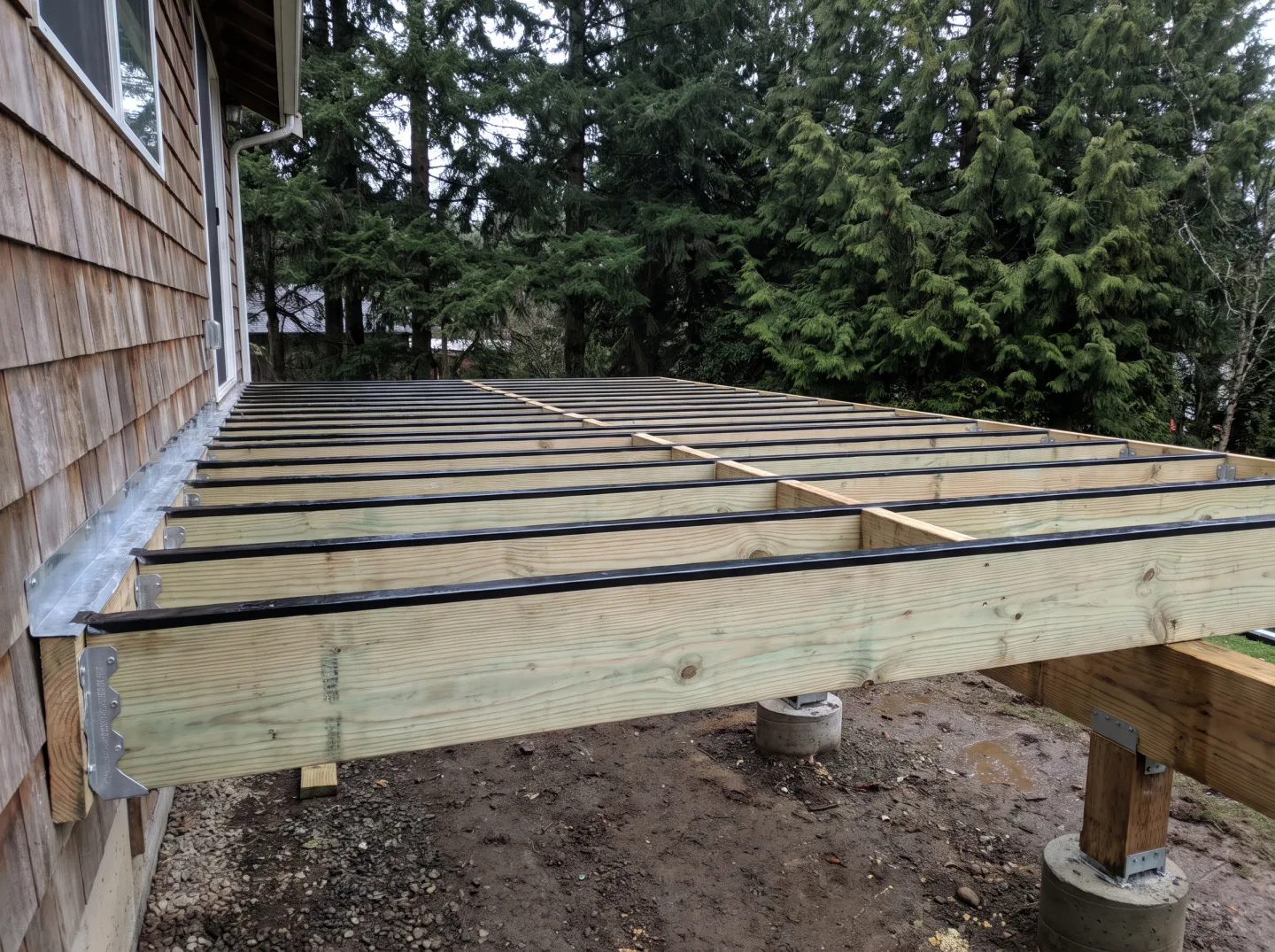
- Pros: lowest upfront cost, strong, easy to repair, takes stain in any color.
- Cons: checks, splits and warps as it dries out between wet seasons. It splinters as it weathers and needs regular sealing. Mold and moss grow into the grain in shady spots.
- Best for: low ground-level decks, budget builds, rental properties, and anyone who plans to resurface in composite later on the same frame.
Western red cedar: pros and cons
Cedar is the classic Pacific Northwest deck: warm color, a pleasant smell, light weight and natural rot resistance from the heartwood. It's what many older homes in Seattle and on the Eastside were built with, and it still looks right on Craftsman and mid-century houses.
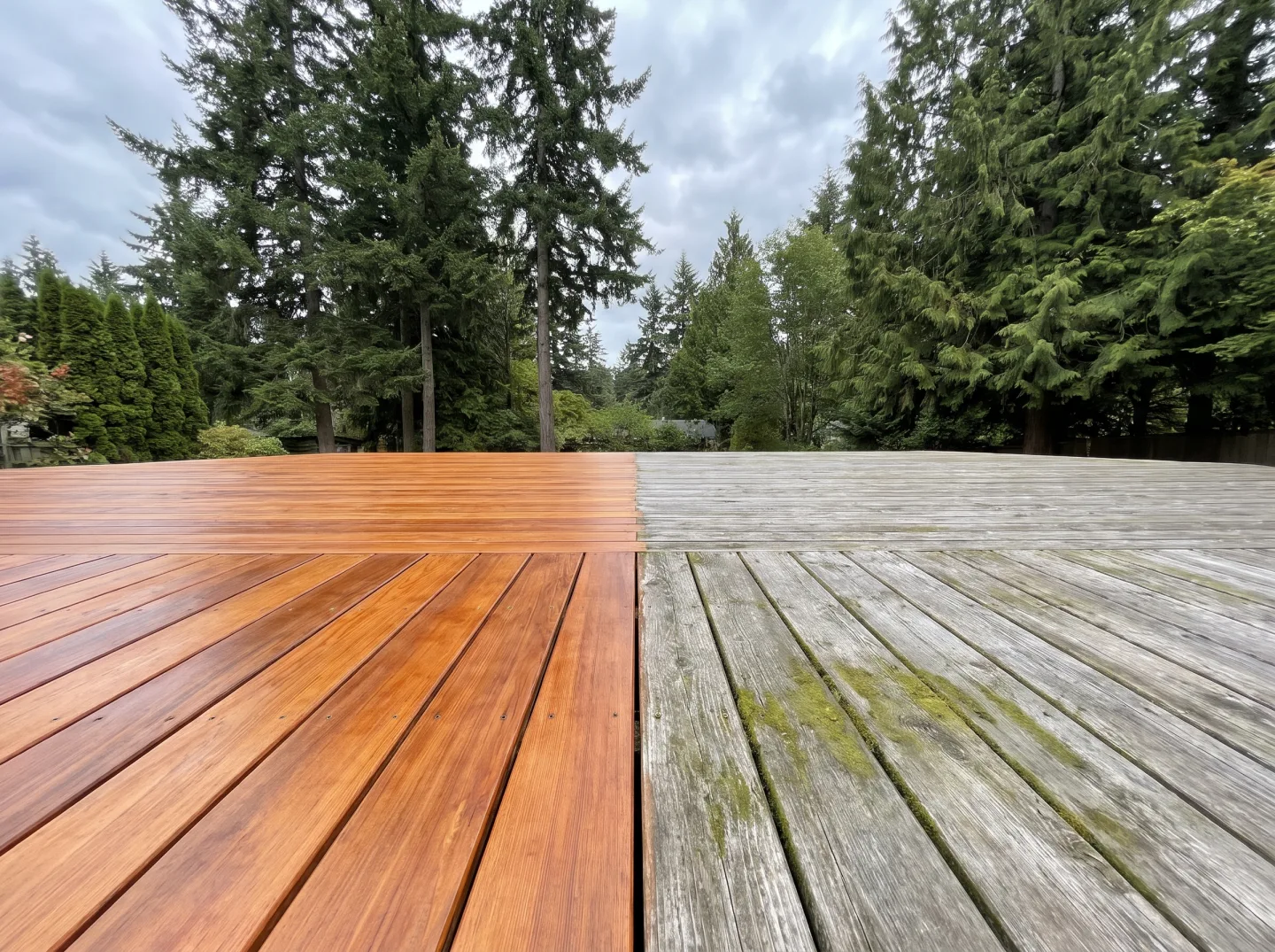
- Pros: beautiful natural wood, stays cooler underfoot than dark composite, naturally resistant to rot and insects, easy to refinish.
- Cons: soft wood that dents and scratches. It turns silver-gray within a season or two if not sealed. It needs cleaning and sealing every one to three years here, and quality knot-free cedar has become expensive.
- Best for: homeowners who want real wood and are happy to keep up with maintenance, or who budget for professional deck restoration every few years.
Composite decking: pros and cons
Modern composite boards combine wood fiber and plastic in a core, wrapped in a hard polymer "cap" on three or four sides. That cap is what makes today's composite very different from the first-generation boards of the 2000s. Those were uncapped and gained a bad reputation for mold and staining.
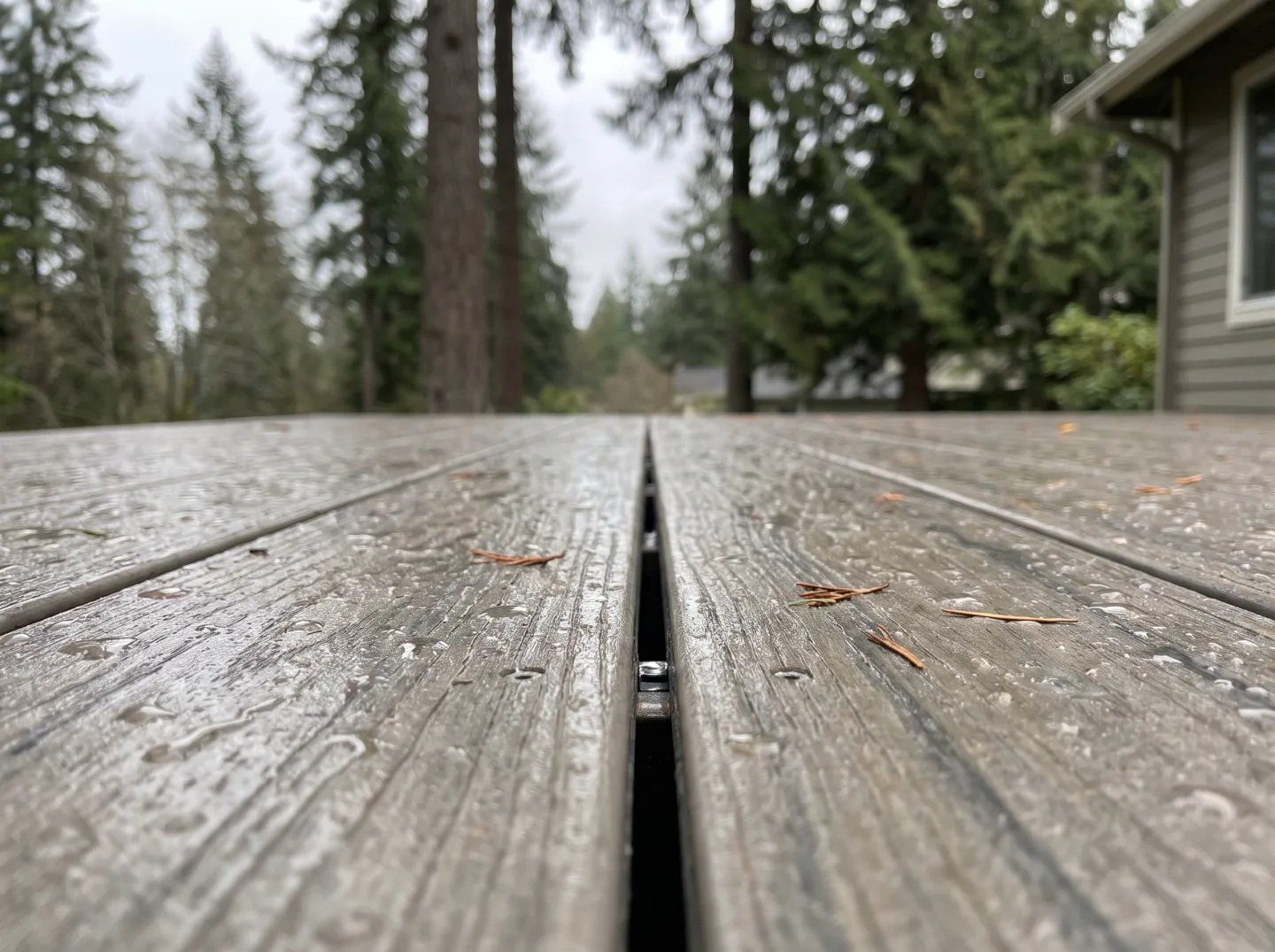
- Pros: no sealing ever, won't rot, split or splinter. Colors stay consistent, hidden fasteners give a clean surface, and the warranties run 25–50 years.
- Cons: the highest upfront cost of the three. Dark colors get hot in direct summer sun. Boards expand and contract with temperature, so installation must follow the manufacturer's gap rules or the warranty is void. Scratches can't be sanded out.
- Best for: owners staying 10+ years, shady and damp yards, families with kids and pets, and anyone who wants their summer weekends back.
A few tips from our installs: choose lighter or mid-tone colors for sunny, south-facing decks. Pick a board with a textured, slip-resistant finish. Make sure the product is fully capped, not just a coated core. See our custom deck building service for how we design and build composite decks.
See the materials before you choose
We bring real samples of pressure-treated, cedar and several composite lines to your home, so you can see them in your own light and next to your siding. Then you get a written, itemized estimate for each option.
Book a free estimateMold, moss and slippery decks in the Pacific Northwest
This is where Seattle is different. From October to May many decks barely dry out, especially under trees or on the north side of the house. On wood decks, mildew, algae and moss grow into the grain and the gaps. That makes the boards slippery, and the trapped moisture shortens the life of the wood.
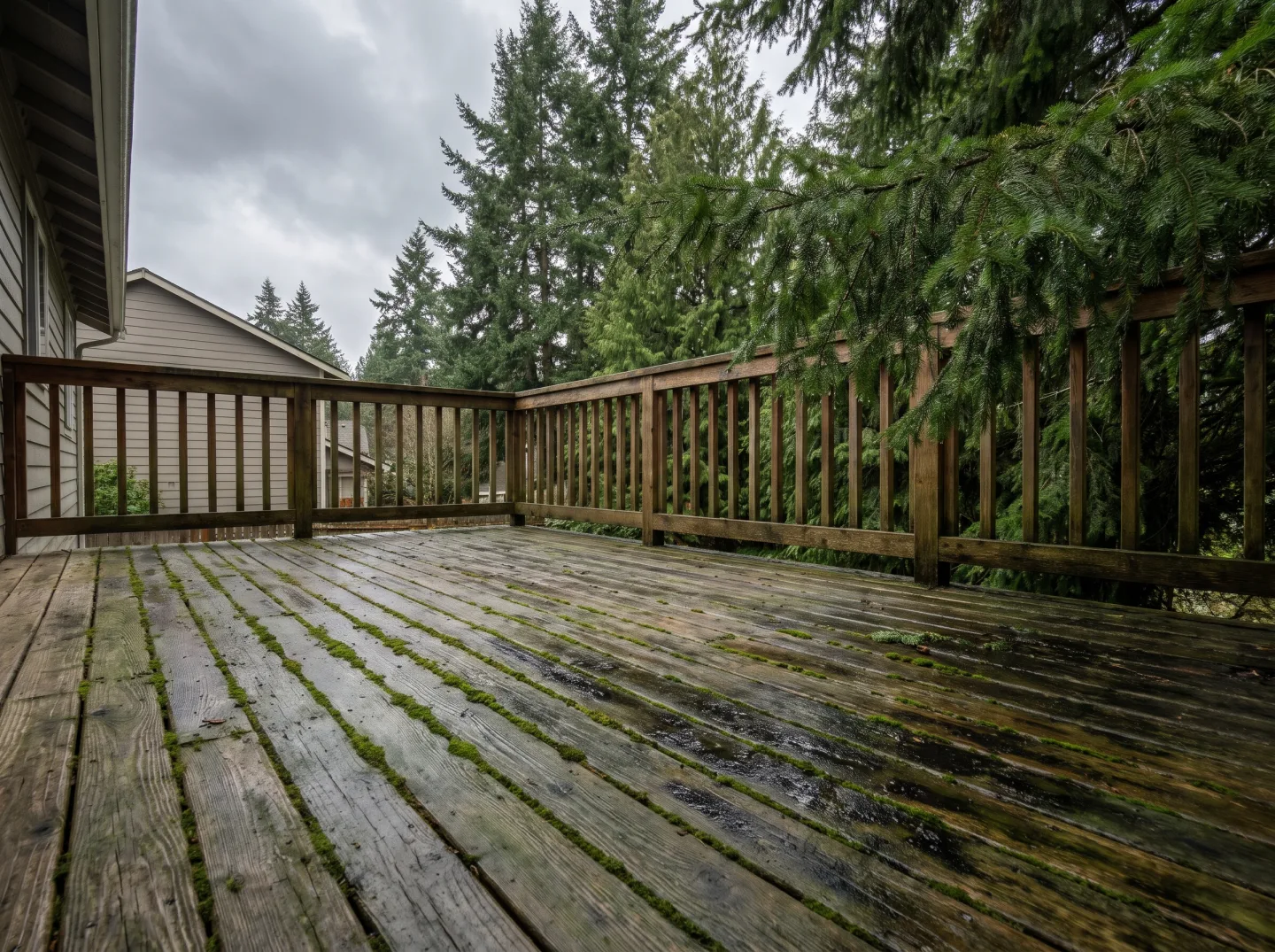
- Wood (PT and cedar): needs an annual clean before growth sets in, plus a sealer with a mildewcide. Algae on wood is the main reason decks get slippery here.
- Capped composite: mold can still form on dirt and pollen sitting on the surface, but it can't get into the board. A wash with deck cleaner and a soft brush once or twice a year handles it.
- Uncapped (older) composite: mold can grow into the board's surface texture. If you have an older composite deck that stays stained, that's usually why.
- For any material: trim back overhanging branches, keep the gaps between boards clear of needles and leaves, and make sure the deck has airflow underneath.
The frame matters more than the boards
Even a composite deck with a 50-year board warranty sits on a pressure-treated wood frame. In our experience the frame, not the decking, is what limits a deck's life in the Pacific Northwest. Whatever surface you choose, ask your builder about:
- Joist tape on top of every joist and beam, so water doesn't sit in the screw holes and seams.
- Ground-contact rated posts on raised metal bases, never buried in soil.
- Proper ledger flashing where the deck meets the house, the number one hidden failure we repair.
- Hot-dip galvanized or stainless hardware rated for treated lumber.
- Joist spacing that matches the decking. Many composites need 12-inch spacing for diagonal layouts and stairs.
Doing this right adds little to the cost of a new deck and can add a decade to its life. If your existing deck is showing problems, our deck repair cost guide covers what fixes cost and when to replace instead.
Which decking is right for you?
Table 4. Quick decision guide
| If this sounds like you… | We'd usually suggest |
|---|---|
| Staying 10+ years, want minimal upkeep | Capped composite |
| Shaded yard under firs or cedars, deck stays damp | Capped composite in a mid-tone color |
| Love the look and smell of real wood, fine with sealing | Western red cedar |
| Tight budget, low deck, or rental property | Pressure-treated, sealed from day one |
| Frame is solid, boards are worn out | Resurface in composite on the existing frame |
| Premium project, high-traffic, want 40+ years | Ipe or another tropical hardwood |
| Selling within 2–3 years | Restore what you have, or a simple PT or cedar deck |
Composite also pairs well with covered outdoor space. A pergola or patio cover over a composite deck makes it usable through much of the rainy season. For HOA neighborhoods in places like Sammamish, Redmond, Bothell and Mill Creek, check approved colors before you choose. We help with the samples and drawings boards usually ask for. Browse finished decks in every material in our portfolio.
Decking materials FAQ
What is the best decking material for the Seattle climate?
For most homeowners, capped composite on a well-detailed pressure-treated frame. It doesn't rot, splinter or need sealing in our wet climate, and mold stays on the surface where it washes off. Cedar is a great choice if you want real wood and are willing to clean and seal it every one to three years.
Is composite decking worth the extra cost in Washington?
Usually, yes, if you plan to stay about ten years or more. Composite costs roughly 25–35% more to install than cedar. Wood decks here need $2–$4 per sq ft of sealing every one to three years, though, so over 20 years the total costs are close, and the composite deck typically has many years of life left.
How long does a cedar deck last in the Pacific Northwest?
A cedar deck typically lasts 15–20 years here with regular cleaning and sealing, sometimes longer on a sunny, well-ventilated site. Unsealed cedar in a shady, damp yard can start to fail in under ten years, usually at board ends and over the joists.
Does composite decking get moldy?
Mold can grow on dirt, pollen and needles sitting on any deck surface. On capped composite it stays on the surface and washes off with a deck cleaner and a soft brush. Older uncapped composite can hold mold in its surface texture, which is why choosing a fully capped product matters in the Pacific Northwest.
Is composite decking slippery when wet?
Quality capped composite with a textured, embossed surface has good slip resistance when wet, generally better than a wood deck with algae on it. Keep any deck clean, because growth on the surface is what makes boards slippery in our climate.
Does composite decking get too hot?
Dark composite colors can get hot in direct afternoon sun, more than cedar. In the Seattle area that's an issue for only a few weeks a year. Choosing lighter or mid-tone colors, or a line with heat-reducing technology, solves it for sunny, south-facing decks.
Is pressure-treated wood safe for decks?
Yes. Modern pressure-treated lumber sold for residential use in the US uses copper-based preservatives and has been the standard for decks since the mid-2000s. Wear a mask when cutting it and don't burn the scraps.
Can you put composite decking on an existing wood frame?
Often, yes, if the frame is in good condition with many years left, and the joist spacing suits the composite. Many composites need 16-inch spacing, or 12 inches for diagonal patterns and stairs. We inspect the joists, beams and ledger first. Resurfacing a sound frame costs much less than a full rebuild.
Get prices for each material, side by side
Licensed and insured in Washington (Lic. #HOMERRA771N2), 12 years building in Seattle, 300+ decks built and restored, 10-year workmanship warranty. Tell us about your project and we'll reply within one business day.
Book a free estimate